How to Teach Your Child to Hold a Pencil Correctly
How children hold a pencil develops in stages. There is no need to worry if a two- or three-year-old grips with the whole palm; that is normal. A parent’s job is to offer suitable practice and a good example as the child grows.
Stages of grip
- Palmar grip: the pencil is held in the whole hand, usually in very young children.
- Finger grip: the pencil is held with the fingers while the wrist still moves a lot.
- Tripod grip: the pencil is held by the thumb, index and middle fingers. This is the grip commonly used for writing.
How to help
- Strengthen finger muscles by squeezing dough, using pegs and picking up small items.
- Use short crayons or pencils. A small size encourages three-finger use.
- Teach the “crocodile” trick: pinch the pencil with thumb and index finger, then rest it on the middle finger.
- Hold the paper with the other hand so it does not slide.
Sitting position
Back supported, feet on the floor, and the table at elbow height. A comfortable position makes the hand easier to control.
When to seek advice
If your child is in primary school and finds it very hard to hold a pencil or tires quickly, talk to a teacher or a specialist. They can judge whether extra support is needed.
Printable practice
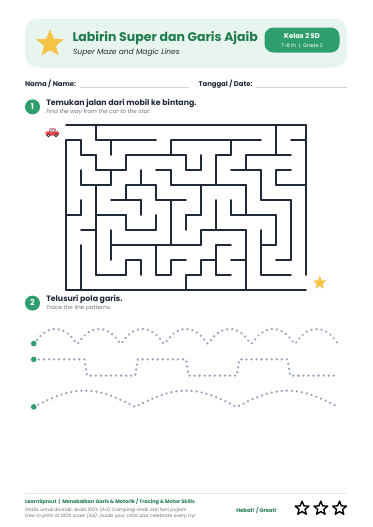
Line-tracing exercises help the grip mature. Try the fine motor worksheets as part of a short daily routine.