 LearnSprout
FREE PRINTABLES
How to Teach Your Child the Alphabet in a Fun Way
Learning letters is one of the first steps toward reading. The good news is that children do not need long lessons or to memorise the whole alphabet at once. Short, enjoyable sessions work far better than long drills that bore them.
Start with sounds, not letter names
Children read more easily when they know a letter’s sound. Say “b” as in the start of “ball”, not “bee”. Once the sound is familiar, the letter name can follow.
Steps you can try
- Begin with the letters in your child’s own name. Meaningful letters are easier to remember.
- Introduce two or three letters at a time and review them for a few days before adding more.
- Hunt for the same letters around the house: food packaging, signs, book covers.
- Match pictures to starting letters, such as apple with A and ball with B.
- Once the sound is familiar, trace the letters so the hands learn too.
Mix movement and play
Young children learn through their bodies. Draw letters in sand or flour, shape them from clay, or walk along letter shapes made with tape on the floor. It turns letters into a game rather than a lesson.
How long each day?
Five to ten minutes is enough for ages 2–3, and about ten to fifteen for ages 4–6. Stop while your child is still keen. A child who finishes happy will want to come back tomorrow.
What to avoid
Do not compare your child with siblings or friends, and do not correct every mistake in their writing. At the beginning, effort matters more than neat results. Praise the process: “You traced the whole letter B!”
Common mistakes
- Teaching the whole alphabet in order from A to Z. The order does not have to be followed; letters a child meets daily are easier to remember.
- Moving to writing before the child knows the sounds.
- Showing capital and small letters at the same time. Start with one form.
- Sessions that are too long, which leads to refusal.
Sample one-week plan
Monday: introduce A and B through objects at home. Tuesday: find both letters on food packaging. Wednesday: match pictures to starting letters. Thursday: trace A and B. Friday: review everything as a game. Weekend: rest or simply sing an alphabet song.
Frequently asked questions
From what age? Many children become interested in letters at 2–3 years, but there is no single rule. Follow your child’s interest.
My child mixes up b and d. Is that normal? At the early stage this often happens. Give plenty of practice and be patient; if it continues for a long time, ask the teacher.
Printable practice
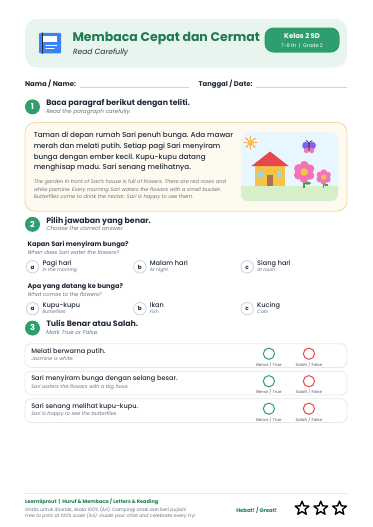
Worksheets that combine tracing, picture matching and letter hunts help you plan a short session with little preparation. Browse the letters and reading worksheets on LearnSprout and choose one that fits your child’s age.
Every child develops at their own pace. If you are unsure about your child’s language development, talk to a teacher or a specialist.