 LearnSprout
FREE PRINTABLES
A Sample Daily Learning Routine for Young Children at Home
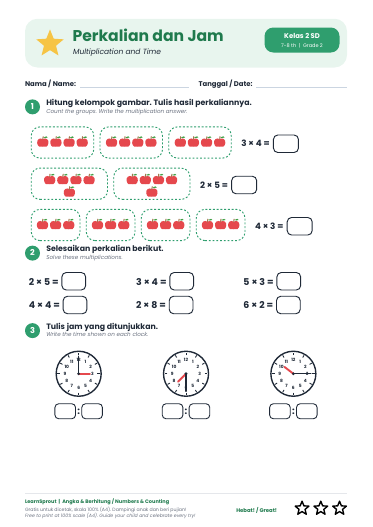
Young children need a clear routine, but not a rigid timetable. A routine lets children know what will happen and feel secure. Here is an example you can adapt to your family.
Basic principles
- Formal learning is enough at 15–30 minutes a day for ages 3–6, split into short sessions.
- The rest is play, meals, rest and time with family.
- Choose learning time when your child is fresh.
- It is fine to change when your child is ill or tired.
Sample schedule
- Morning: wake up, bath, breakfast, free play.
- Late morning: a 10–15 minute learning session, such as tracing letters or counting with objects.
- Midday: lunch and a nap.
- Afternoon: outdoor play, colouring or creative activity.
- Evening: dinner, bath, a bedtime story, then sleep.
Daily variety
Give each day a theme so it is not monotonous: Monday letters, Tuesday numbers, Wednesday colouring, Thursday shapes and patterns, Friday stories. Days off can be entirely worksheet-free.
Offer choices
Let your child pick one of two activities. Choice gives a sense of control and reduces resistance.
Weekly review
At the end of each week, notice what your child enjoyed and what is still hard. Adjust next week’s activities. A good routine is one you can keep up consistently without stressing you or your child.
Common mistakes
- Making the schedule too packed so the child loses free play time.
- Copying another family’s schedule without adapting it to your own child.
- Leaving no room for days that do not go as planned.
- Changing the schedule too often so the child is confused.
Adjusting the schedule
A child who is freshest in the morning: put the learning session after breakfast. A child who only becomes active in the afternoon: schedule learning after the nap. For ages 2–3, two sessions of 5–10 minutes a day are enough.
Frequently asked questions
What if my child does not want to learn today? Skip the day or replace it with a story and colouring. Long-term consistency matters more than one missed day.
Do we study on weekends too? It can be more relaxed, such as family activities that still introduce letters and numbers through play.
Daily materials
Prepare a few worksheets for the week from the free LearnSprout worksheets to match each day’s theme.