 LearnSprout
FREE PRINTABLES
When Your Child Resists Learning or Gets Bored Quickly
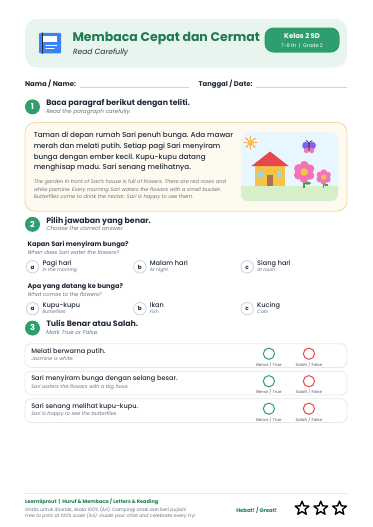
Almost every parent has faced a child who refuses to sit down and learn. Before deciding your child is lazy, try to find out what makes them reluctant.
Possible causes
- Learning time falls when the child is tired or hungry.
- The task is too hard or too easy.
- The session is too long for their age.
- The child feels compared with others or constantly corrected.
- The activity feels boring and offers no choice.
What you can try
- Pick a time when your child is fresh, such as the morning or after play.
- Shorten sessions to 5–10 minutes and finish before your child gets bored.
- Offer two choices: “Colouring first or counting first?”
- Change the setting: learn on the floor, the porch or in the garden.
- Mix learning with play and real objects.
- Praise effort, not only correct answers.
Helpful ways to speak
Replace “Why can’t you do it yet?” with “Let’s try again together.” Children are more open when they feel accompanied, not judged.
Make sure the level is right
If it is too hard, go down a level so your child can succeed first. If it is too easy, add a small challenge. A sense of success builds motivation.
When to ask for help
If the refusal lasts a long time, your child seems very distressed, or has trouble focusing in many situations, talk to a teacher or a specialist.
Common mistakes
- Labelling the child “lazy” in front of them.
- Threatening or promising big rewards to make the child study.
- Comparing with other children.
- Forcing the child to finish the whole worksheet even when very tired.
Sample one-week plan
Monday: a 5-minute session where the child chooses the activity. Tuesday: learning through play. Wednesday: a break from worksheets, read a story. Thursday: a 10-minute session at the freshest time. Friday: celebrate the week’s effort with a favourite activity.
Frequently asked questions
Are rewards good for motivation? Small occasional rewards are fine, but specific praise for effort usually lasts longer.
When should I be concerned? If your child refuses to learn for a long time, seems very anxious, or has difficulty focusing in many situations, talk to a teacher or specialist.
Varied materials
Variety keeps interest alive. You can alternate between letters and reading, colouring and stories.